
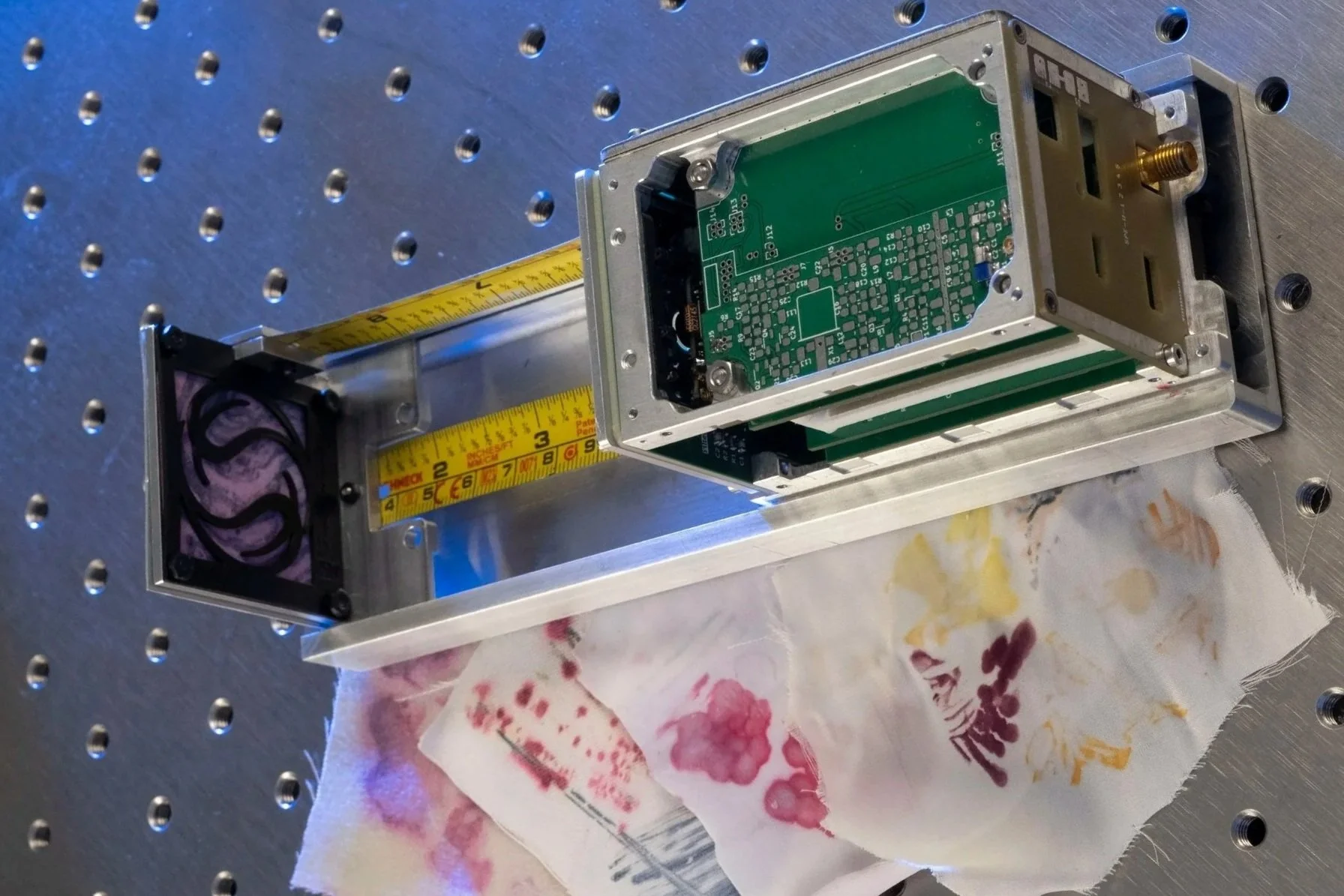
Sending a bacteria-dyed textile to space
This project originated from an email sent by Dr Gilles Baillet, Lecturer and Innovator in Space Technologies at the University of Glasgow, which asked: “Would you be interested in sending art to the Moon?” Naturally, we accepted.
The idea developed following Dr Baillet’s visit to the ASCUS Lab for a student-led workshop, where he learned about our work using pigments produced by bacteria to dye textiles. Some bacteria produce pigments naturally as a form of defence. For example, certain pigments possess antimicrobial properties, protecting the bacteria against other microorganisms, while others exhibit UV-protective characteristics.
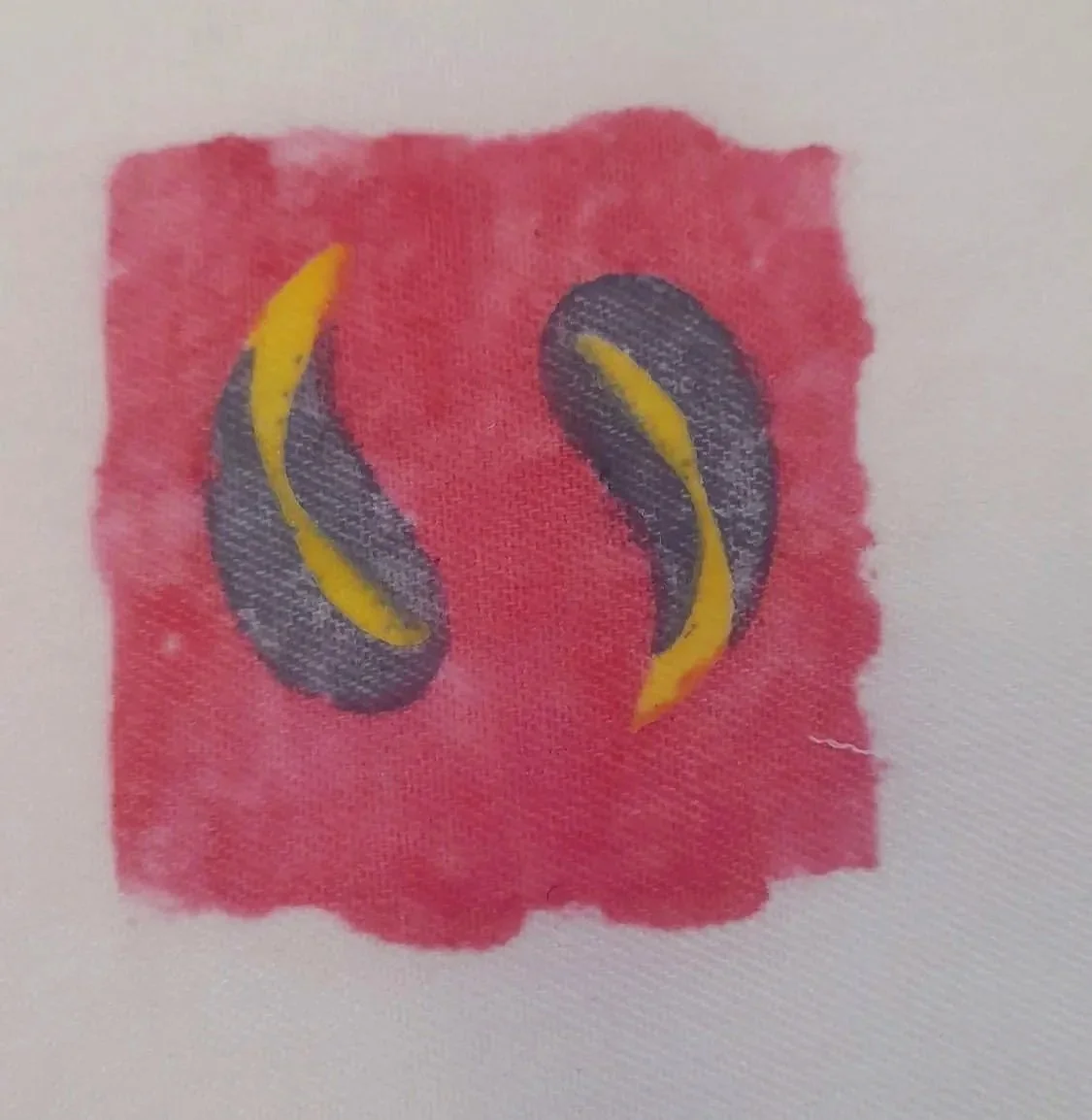
Design and colours used in test fabric.
Dr Baillet was interested in whether these pigments would fade at different rates when exposed to cosmic and ultraviolet radiation, and whether this behaviour could be harnessed as a visual indicator of radiation exposure. In this context, a colour-changing textile patch could potentially be integrated into spacesuits or used to cover sensitive space equipment, providing a visible indication of cumulative radiation exposure over time.
Initial testing focused on different pigment and colour combinations. In collaboration with fashion designer Katie Tubbing, a patterned textile sample was designed specifically for the first flight test.
At this stage, a small textile sample is scheduled to be sent into low Earth orbit aboard a miniature satellite known as a PocketQube in the coming months. Images will be captured during the mission to observe how the pigments change and the rate at which any fading occurs. The resulting data will provide preliminary evidence to support proof of concept and inform applications for further funding, enabling larger-scale testing and exploration of the project’s full range of potential applications.
Beyond space-based use, the technology could be applied in terrestrial settings, such as radiation-sensitive scrubs or protective aprons for radiotherapy and medical imaging staff. It could also be incorporated into everyday fashion, creating colour-changing garments that help individuals monitor their exposure to ultraviolet radiation and potentially reduce the risk of skin cancer.
Watch this space as we’ll be updating this page after the first space flight and as the project progresses. Learn more here.
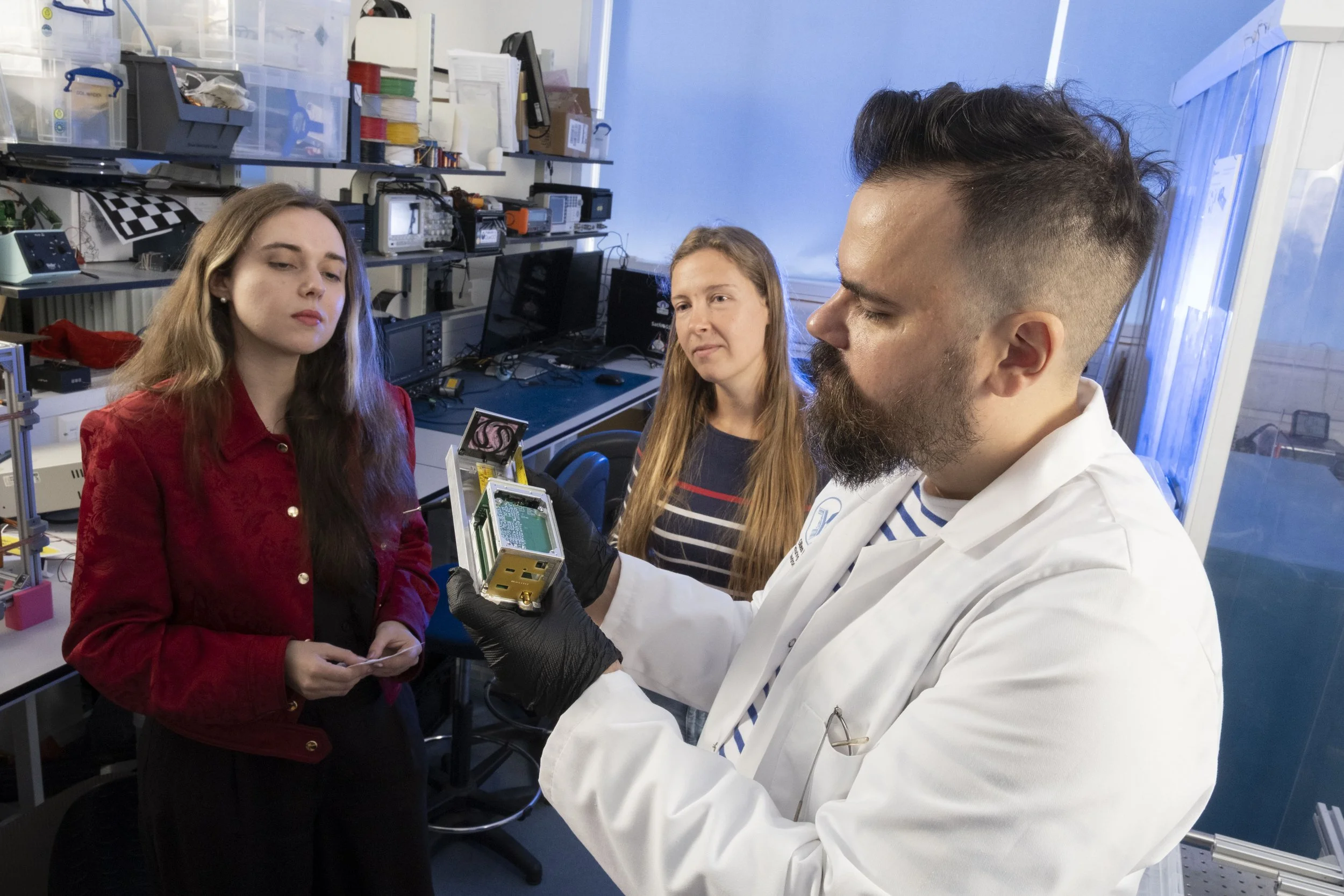
Project team designer Katie Tubbing, ASCUS Manager Dr Keira Tucker and Project lead Dr Gilles Bailet.
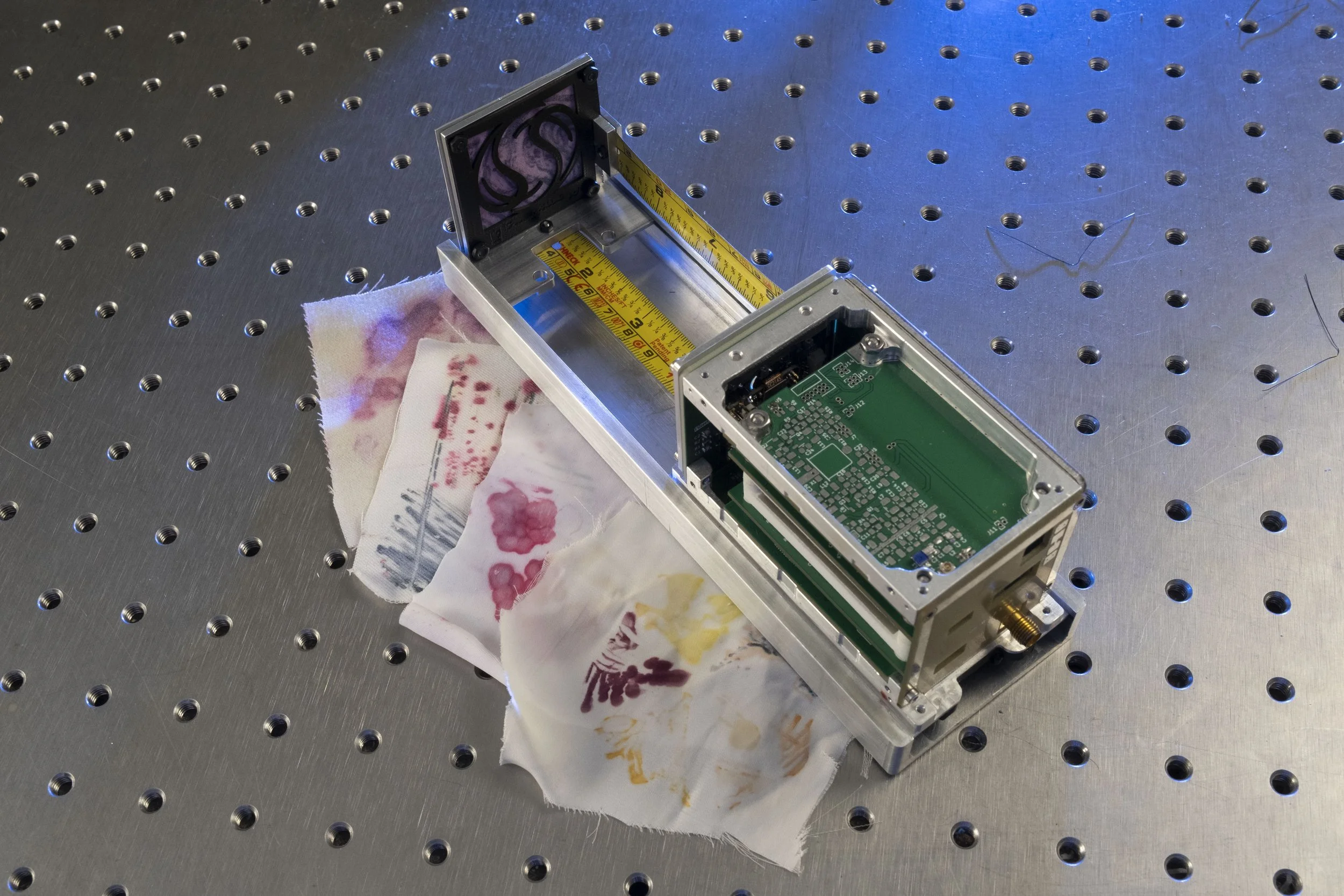
Examples of fabrics dyed with pigmented bacteria and the PocketQube